Why Did My Soup Curdle? Fix It Fast
That moment when your silky soup turns grainy, speckled, or flat-out separated is maddening. If you’re asking, why did my soup curdle, the short answer is usually too much heat, the wrong timing, or dairy meeting acid before it was properly tempered. The good news? A curdled soup is often preventable, sometimes fixable, and almost always a sign that one small step went sideways – not that dinner is ruined.
Listen, I get it. You wanted cozy, creamy, restaurant-style soup, and instead the pot looks like it had a bad day. This happens to home cooks all the time with cream soups, chowders, bisques, cheesy soups, and anything finished with milk, sour cream, yogurt, or half-and-half. Once you know what causes curdling, you can spot trouble early and keep the texture smooth.
Why did my soup curdle in the first place?
Curdling happens when the proteins in dairy tighten up and separate from the liquid. In plain kitchen terms, the smooth emulsion breaks. Instead of one creamy pot, you get tiny clumps, oily puddles, or a grainy texture.
Heat is the biggest culprit. Milk and cream can handle gentle warmth, but a hard boil pushes them too far. If you simmered your soup aggressively after adding dairy, that’s the most likely answer.
Acid is the second big reason. Tomatoes, wine, lemon juice, vinegar, and even some sharp cheeses can destabilize dairy. That doesn’t mean you can’t combine them. It just means the order, temperature, and ratio matter.
Salt can also play a role, especially in soups with reduced stock, cured meat, or lots of cheese. And lower-fat dairy is simply less forgiving. Heavy cream is much more stable than skim milk, while sour cream and yogurt need extra care.
A quick bit of soup history, because this problem is older than your stockpot
Cream-based soups have been around for centuries, especially in European cooking, where cooks thickened broths with cream, egg yolks, butter, and pureed vegetables. Classic bisques, chowders, cream of mushroom soup, and veloute-style soups all depend on balancing richness with gentle heat.
Before modern temperature control, curdling was even more common. Cooks learned to finish soups carefully, stir constantly, and use thickeners like roux to help stabilize the mixture. That old-school wisdom still works. Most creamy soup success comes down to patience, not fancy technique.
The ingredients most likely to cause a curdled soup
If you’re troubleshooting a broken pot, start with what went in. The usual suspects are milk, half-and-half, heavy cream, sour cream, yogurt, cream cheese, and shredded cheese. Acidic ingredients like tomatoes, white wine, lemon juice, or vinegar make these even trickier.
Here’s the trade-off: the richer the dairy, the more stable it tends to be, but also the heavier the final soup feels. Heavy cream gives you the safest texture. Milk keeps things lighter, but it can split faster. Sour cream and yogurt bring great tang and body, though they need to be tempered before they hit hot liquid. Cheese adds flavor and thickness, but pre-shredded cheese often contains anti-caking agents that can make texture worse instead of better.
A little flour or cornstarch can help protect dairy by giving the soup more structure. Pureed potatoes, cauliflower, beans, or squash can do something similar while also adding body.
Tools that help keep soup smooth
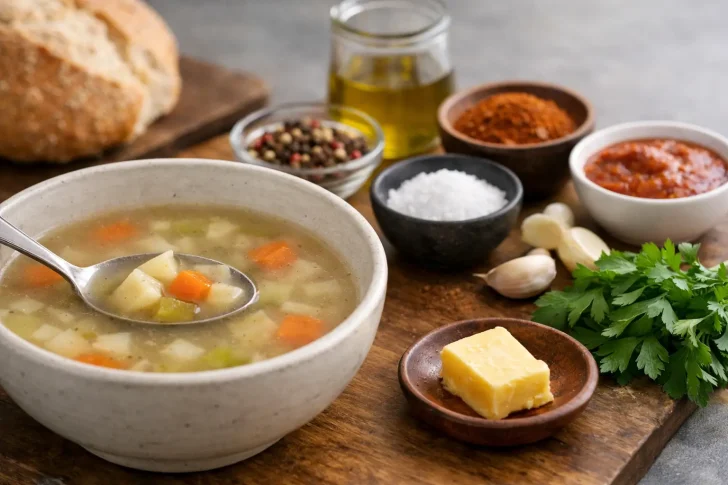
You do not need restaurant gear, but a few basics make a difference. A heavy-bottomed pot helps distribute heat evenly, which matters a lot for dairy-based soup. A ladle is useful for tempering. A whisk helps bring ingredients together gently. An immersion blender can rescue minor graininess, and a fine-mesh strainer is handy if the texture is only slightly off.
Low heat matters as much as any tool. If your burner runs hot, move the pot partially off the heat while stirring in dairy.
How to make creamy soup without curdling
Start by building the soup base first. Saute your aromatics, add broth, vegetables, starches, or proteins, and let everything cook fully before you bring in milk or cream. If your soup includes tomatoes, wine, or lemon, cook those into the base so their flavor settles before dairy enters the scene.
If you’re using a roux, make it early. Butter and flour cooked together create a stable base that helps hold everything in suspension. Once broth is added and thickened, the dairy has a better chance of staying smooth.
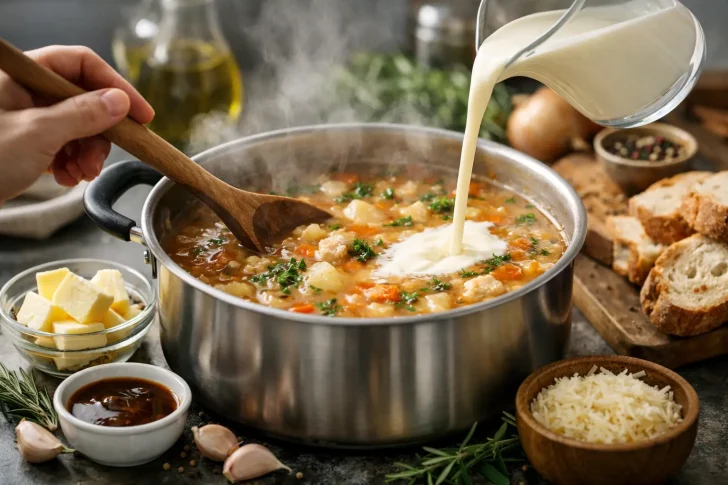
When it’s time to add dairy, lower the heat. The soup should be hot but not boiling. For milk, sour cream, or yogurt, temper it first by whisking a small ladle of hot soup into the dairy in a separate bowl. Then add that warmed mixture back into the pot slowly while stirring.
Cheese needs the same gentle treatment. Turn the heat way down or even off, then add cheese a handful at a time. Stir until melted before adding more. This is especially important for cheddar soups, broccoli cheese soup, and potato soup with cheese.
Once dairy is in, avoid a rolling boil. Keep the soup warm enough to serve, but not hot enough to break.
Can you fix curdled soup?
Sometimes, yes. It depends on how far the soup has gone.
If the curdling is mild and the soup just looks slightly grainy, take it off the heat immediately. Stir in a splash of cream if you have it, since higher-fat dairy can help smooth the texture. Then blend gently with an immersion blender. That won’t always fully reverse a split soup, but it can improve the look and mouthfeel.
If the soup is badly separated with obvious clumps, straining may help. You’ll lose some body, but the soup can still be good. In cheesy soups, adding a small slurry of cornstarch and milk can sometimes help bring things back together if the damage is minor.
If the flavor is still great, don’t toss it too fast. A slightly grainy potato soup or tomato cream soup may still be perfectly enjoyable, especially with garnishes that add texture on purpose.
Step-by-step rescue method for a soup that split
First, remove the pot from heat right away. Continued heat makes separation worse.
Next, taste it. If the soup still tastes balanced, you’re fixing texture, not rebuilding dinner.
Then whisk in 2 to 4 tablespoons of warm heavy cream, depending on batch size. If you only used milk before, this extra fat can help.
Blend briefly with an immersion blender or transfer carefully to a blender in batches if needed. Do not over-blend if the soup has potatoes, or it can turn gluey.
If clumps remain, pour the soup through a fine-mesh strainer and return the smooth portion to a clean pot over very low heat.
For a final touch, garnish strategically. Croutons, herbs, shredded cheese, cracked pepper, or a drizzle of olive oil shift the focus from texture to flavor and make the bowl feel intentional.
Final plating and serving ideas
A creamy soup deserves a little flourish, especially if you just saved it. Ladle it into warm bowls so the temperature stays gentle. Finish with chopped chives, parsley, crispy bacon, black pepper, or toasted breadcrumbs for contrast. If it’s a tomato cream soup, a swirl of cream looks beautiful. If it’s chowder, try extra herbs and oyster crackers. If it’s broccoli cheese, a little sharp cheddar on top works better than melting more into the pot.
Extra tips and ingredient swaps
If you make creamy soups often, choose full-fat dairy when possible. It buys you margin for error. If you want a lighter result, add milk at the very end and keep the heat low.
For tomato soup, add a pinch of baking soda to the tomatoes before adding cream. It can soften acidity, though use a light hand so the flavor stays bright.
If you love tangy soups, use creme fraiche instead of sour cream when possible. It’s more heat-stable. For dairy-free soups, coconut milk is usually more stable than almond milk or oat milk, though it changes the flavor.
And if you’re making soup ahead, reheat slowly. A soup that looked perfect yesterday can split today if reheated too aggressively.
FAQ
Why did my soup curdle after I added milk?
Most likely the soup was too hot. Milk is less stable than cream and can curdle if added to boiling or near-boiling liquid.
Can I eat curdled soup?
Usually, yes, as long as the ingredients were fresh and the soup was stored safely. Curdling is often a texture issue, not a food safety issue.
How do I keep cheese soup from curdling?
Use low heat, add cheese gradually, and avoid pre-shredded cheese when possible. A little starch in the soup base also helps stabilize it.
Does lemon juice make soup curdle?
It can. Acid can cause dairy proteins to separate, especially in milk-based soups. Add lemon carefully and balance it with enough fat.
What dairy is best for creamy soup?
Heavy cream is the most reliable. Half-and-half works with care. Milk, yogurt, and sour cream can work too, but they need gentler heat and better timing.
The next time your pot starts looking suspicious, don’t panic. Turn down the heat, trust the process, and remember that creamy soup is less about perfection and more about knowing when to be gentle.