How to Build a Snack Board That Wows
If you’ve ever set out a plate of crackers and cheese and felt like it looked a little sad, you’re in the right place. Learning how to build a snack board is less about fancy ingredients and more about balance, contrast, and making the whole thing feel generous, colorful, and easy to graze.
The best snack boards hit that sweet spot between effortless and impressive. They invite people to linger, snack, and come back for one more bite, which is exactly what you want at game night, happy hour, holidays, or a low-key weekend get-together. And the good news is this: you do not need a specialty shop haul or professional styling skills to make one that looks beautiful and tastes even better.
How to build a snack board without overthinking it
Listen, I get it. It’s very easy to scroll past those gorgeous boards piled high with rare cheeses, edible flowers, and tiny jars of things you do not keep in your pantry. But a great board is really just a smart mix of flavors and textures arranged with a little intention.
Start by thinking in categories instead of exact ingredients. You want something creamy, something crunchy, something salty, something fresh, and something a little surprising. That framework keeps the board from feeling flat. If everything is beige and crisp, it gets boring fast. If everything is rich and heavy, people stop eating after a few bites.
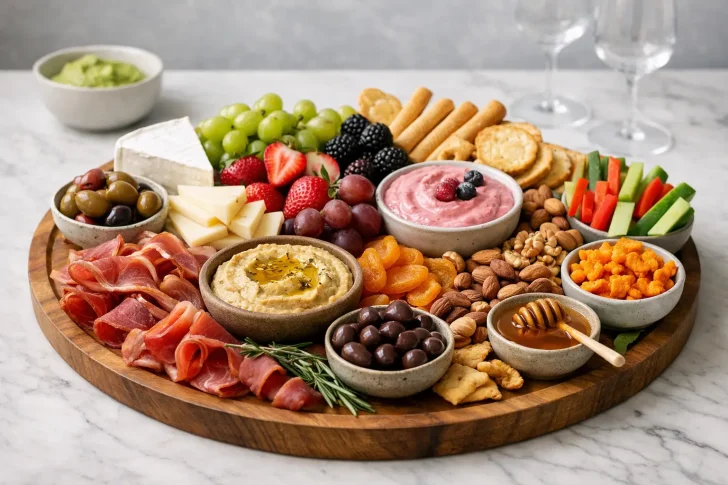
A strong snack board usually includes cheese, meat if you want it, crackers or bread, fruit or vegetables, and a few extras like nuts, olives, pickles, jam, or chocolate. It depends on the occasion, of course. For a family movie night, you might lean casual with pretzels, sliced apples, cheddar cubes, popcorn, and a creamy dip. For a holiday gathering, maybe you bring in brie, salami, grapes, candied nuts, fig jam, and rosemary for a little drama.
The real trick is choosing ingredients that make each other taste better.
Build around contrast, not quantity
A common mistake is buying too much of the same kind of snack. Three soft cheeses and four mild crackers may sound abundant, but the board will eat one-note. Contrast is what makes a board feel exciting.
Pair a rich cheese with something bright and juicy, like grapes or orange slices. Add a salty cured meat next to a sweet jam or honey. Set crisp cucumbers or snap peas near a creamy dip. Use one sturdy cracker and one lighter, flakier option so the textures change from bite to bite.
Color matters too, but not in a fussy way. A board looks more appetizing when you break up pale ingredients with deep berries, green herbs, or glossy olives. Even a handful of cherry tomatoes can wake up the whole thing. Think of it like dressing a table with enough variation that your eye keeps moving.
If you’re serving a crowd, it also helps to include a few familiar favorites. Not everyone wants blue cheese or spicy soppressata. A mix of adventurous and approachable choices usually gets the best response.
The easiest formula for a balanced board
If you want a reliable method for how to build a snack board, use this simple structure: choose 2 cheeses, 1 to 2 meats, 2 crunchy bases, 2 fresh items, and 3 extras.
For cheeses, pick different textures. A firm cheddar or gouda plus a soft brie, goat cheese, or whipped feta works beautifully. For meats, salami and prosciutto are easy wins, but you can absolutely skip meat and add more dips, roasted chickpeas, or marinated mozzarella instead.
Your crunchy bases can be crackers, toasted baguette slices, pita chips, pretzels, or flatbread. Fresh items might be apple slices, grapes, cucumber rounds, celery, strawberries, or sugar snap peas. Extras are where the board gets personality: olives, cornichons, dried apricots, candied pecans, dark chocolate, hummus, hot honey, or grainy mustard.
That formula gives you enough variety without turning grocery shopping into a scavenger hunt.
How to arrange a snack board so it looks full and inviting
This is the part that makes the biggest visual difference. Before you add anything, place your small bowls or ramekins first. Fill them with dip, olives, jam, nuts, or anything loose or juicy. These bowls act like anchors and help the board feel organized.
Next, add the biggest items, usually cheeses and any folded meats. Space them out instead of clustering them in one corner. Then build around them with crackers, fruit, and vegetables. Tuck smaller items into gaps so the board looks abundant from edge to edge.
Try not to line everything up in neat rows unless that’s the look you want. Boards tend to feel more relaxed and generous when ingredients overlap a little and flow into one another. Fan out apple slices. Fold salami into loose ribbons. Stack crackers in little groups instead of one giant pile.
One practical note: keep wet ingredients away from crackers if the board will sit out for a while. Soggy crackers are a fast way to kill the mood.
Ingredient swaps that make entertaining easier
The best boards are flexible. If brie is pricey, use cream cheese topped with pepper jelly. If you forgot fresh fruit, use dried cherries or apricots. If you want to keep things kid-friendly, lean into cubes of cheddar, sliced turkey, pretzels, baby carrots, and ranch dip.
Season also changes the mood of the board. In summer, peaches, watermelon, cherry tomatoes, and basil feel fresh and easy. In fall and winter, pears, figs, roasted nuts, cranberry sauce, and sharp cheeses bring more coziness. Around the holidays, a simple garnish of rosemary or pomegranate seeds can make the whole thing feel festive without much effort.
If you need to prep ahead, cut firm cheeses, wash fruit, and portion dips a few hours in advance. Save crackers and sliced apples for closer to serving time if you want the freshest texture.
Recipe description
This snack board recipe is a simple, crowd-pleasing platter built with two cheeses, one cured meat, fresh fruit, crisp vegetables, crackers, and a few bold extras for contrast. It’s designed for easy entertaining and delivers creamy, crunchy, sweet, salty, and tangy bites all in one board. The result is colorful, flexible, and just elevated enough to feel special without making you work all day.
Easy snack board recipe
Ingredients
- 1 small wedge brie
- 6 ounces sharp cheddar, sliced or cubed
- 4 ounces salami
- 1 sleeve buttery crackers
- 1 sleeve seeded crackers
- 1 cup green grapes
- 1 apple, thinly sliced
- 1 cup cucumber rounds
- 1/2 cup olives
- 1/3 cup candied pecans
- 1/4 cup fig jam or pepper jelly
- 2 tablespoons honey, optional
- Fresh rosemary or thyme, optional for garnish
Instructions
Set a medium board or large platter on your counter and place a small bowl of olives and a small bowl of fig jam on it first. Add the brie and cheddar in separate areas so people can reach them easily.
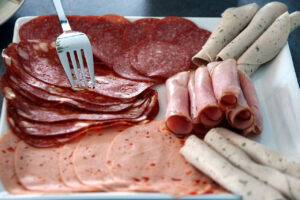
Fold or loosely ribbon the salami and tuck it beside one of the cheeses. Arrange the crackers in small groups around the board, leaving space for the fresh items.
Add the grapes, apple slices, and cucumber rounds, filling in larger open spaces first. Scatter the candied pecans into smaller gaps to make the board feel full.
If using, drizzle a little honey over the brie just before serving. Finish with a few rosemary or thyme sprigs for color. Serve right away, or chill briefly and add crackers just before guests arrive.
Serving notes
This board serves about 4 to 6 people as an appetizer. If you’re serving it as the main snack spread for a longer party, double the crackers and add one more protein or dip.
A few smart fixes if your board feels off
If your board looks sparse, you probably need more small fillers, not more expensive centerpieces. Grapes, nuts, pretzels, or baby carrots can fill empty space quickly and make the whole spread feel more abundant.
If it tastes too rich, add something acidic like pickles, mustard, citrus, or juicy fruit. If it feels too snacky and not substantial enough, add heartier items like hard-boiled eggs, hummus, chicken salad, or extra sliced meat. And if you’re worried about budget, scale back the specialty items and focus on one standout cheese plus affordable produce and pantry staples.
That’s really the charm of a snack board. It can be relaxed or polished, budget-friendly or a little fancy, built from what’s in your fridge or planned around a party menu. Once you know how to balance flavor, texture, and placement, you can make one for almost any moment worth gathering around.