Guide to Sandwich Platter Planning for Parties

0
(0)

A sandwich platter can look generous and effortless, but anyone who has hosted knows the truth: one sad stack of dry turkey triangles can disappear fast, while the good stuff vanishes before you sit down. This guide to sandwich platter planning answers the big question: how do you build a party-worthy spread without making yourself crazy? The answer is a simple formula of varied fillings, sensible portions, fresh assembly, and a platter that gives every guest an easy choice.

Listen, I get it. You want the table to look special, but you also want to enjoy your own gathering. This make-ahead Italian deli sandwich platter has salty meats, creamy provolone, peppery arugula, crunchy vegetables, and a bright vinaigrette that makes basic sandwich bread taste downright craveable.

Why Sandwich Platters Always Work

Sandwiches have been feeding crowds since the 18th century, when the Earl of Sandwich supposedly asked for meat tucked between bread so he could eat without leaving the card table. Whether that story is perfectly true or not, the appeal absolutely is: sandwiches are portable, customizable, and comforting.

A platter takes that practical idea and makes it feel festive. Instead of committing everyone to one large casserole or a complicated menu, you offer familiar food with enough variety to please different appetites. For casual birthdays, game days, baby showers, picnics, and holiday open houses, that flexibility is gold.

The key is not creating ten kinds of sandwiches. It is creating two or three well-chosen styles with different flavors and textures. One classic deli option, one vegetarian-friendly option, and one bolder sandwich usually covers the room beautifully.

Guide to Sandwich Platter Planning: Portions First

Before buying bread or slicing a single tomato, count your guests and consider when you are serving the platter. If sandwiches are the full meal, plan for 1 1/2 standard sandwiches per adult, or roughly 4 to 6 finger-sandwich pieces per person. If you are also serving pasta salad, fruit, chips, dips, and dessert, one full sandwich per person is usually enough.

For a mixed crowd, I like to make 70 percent meat-filled sandwiches and 30 percent vegetarian sandwiches. If you know you have several vegetarians, shift that balance. It is much better to have a few extra veggie sandwiches than watch one guest pick at potato chips all afternoon.

Use sturdy bread that holds up to fillings. Soft white sandwich bread is lovely for tea sandwiches, but a hearty Italian loaf, ciabatta rolls, focaccia, or bakery wheat bread is a safer choice for a lunch platter. Skip very crusty bread if you are serving older guests or young children, and avoid bread with huge open holes if juicy ingredients are involved.

Recipe Description: Italian Deli Party Sandwich Platter

This colorful Italian deli platter is built for a crowd of 10 to 12 as a light meal, or up to 16 guests alongside other party food. Turkey, salami, provolone, roasted peppers, and a quick red wine vinaigrette give it classic deli-shop energy, while a creamy chickpea and mozzarella sandwich makes sure the platter has a satisfying meatless option. Cut into small portions, it is easy to grab, easy to eat, and far more exciting than a store-bought tray.

Ingredients

  • 3 large Italian loaves, ciabatta loaves, or rectangular focaccia breads
  • 1 pound thinly sliced turkey breast
  • 12 ounces thinly sliced Genoa salami
  • 12 ounces sliced provolone cheese
  • 8 ounces fresh mozzarella, sliced
  • 1 can chickpeas, drained and rinsed
  • 1/3 cup mayonnaise
  • 2 tablespoons prepared pesto
  • 1 cup jarred roasted red peppers, patted dry
  • 2 cups arugula or shredded romaine
  • 1 large English cucumber, thinly sliced
  • 2 large tomatoes, thinly sliced and lightly salted
  • 1/2 small red onion, very thinly sliced
  • 1/4 cup extra-virgin olive oil
  • 2 tablespoons red wine vinegar
  • 1 teaspoon Italian seasoning
  • 1/2 teaspoon kosher salt, plus black pepper
  • Optional garnish: pepperoncini, olives, fresh basil, grapes, and potato chips

Tools and Equipment Needed

You will need a large cutting board, a serrated bread knife, a small mixing bowl, a fork or potato masher, measuring spoons, parchment paper, and one large rimmed platter or sheet pan. A sheet pan is not fancy, but it is wonderfully practical when your guest list grows.

Step-by-Step Preparation

  1. Make the vinaigrette by whisking olive oil, red wine vinegar, Italian seasoning, salt, and several grinds of black pepper. Set it aside. In another bowl, mash the chickpeas with mayonnaise and pesto until chunky but spreadable. Taste and add a pinch of salt if needed.
  1. Slice each loaf horizontally. If the bread is exceptionally soft, lightly toast the cut sides for 3 to 5 minutes at 350 degrees F. This small move gives the bread a little backbone without turning it hard.
  1. Build the Italian sandwiches on two loaves. Layer turkey, salami, provolone, roasted red peppers, cucumber, tomato, red onion, and arugula. Drizzle sparingly with vinaigrette. Do not soak the bread – a little sharp dressing goes a long way.
  1. Build the vegetarian loaf by spreading the chickpea pesto mixture on the bottom half. Add fresh mozzarella, roasted peppers, cucumber, tomato, and arugula. Finish with a light drizzle of vinaigrette, then place the top halves of the bread on each sandwich.
  1. Wrap each whole sandwich snugly in parchment, then refrigerate for 20 to 30 minutes. This rest helps the layers settle, which means cleaner slices and fewer runaway tomatoes.
  1. Use a serrated knife to cut sandwiches into halves, then halves again for party-size portions. Wipe the knife between cuts if cheese or filling begins to drag. Arrange the pieces upright or slightly overlapped on the platter.

Final Plating and Decoration

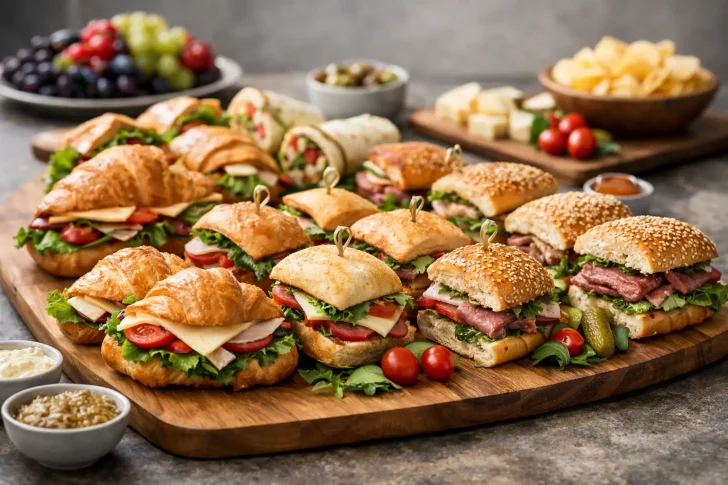
A pretty sandwich platter does not require complicated styling. Start with the sandwich pieces in loose rows, leaving a little breathing room between the different varieties. Tuck basil leaves, pepperoncini, olives, and grapes into open spaces. Add chips in a separate bowl or place them at one end only, so they stay crisp and do not crowd the sandwiches.

If you are labeling options for guests, a small card that says “Italian Deli” and “Pesto Chickpea Mozzarella” is enough. This is especially helpful at showers, office lunches, or larger family gatherings where you may not be able to explain every filling yourself.

Make-Ahead Tips and Easy Variations

The best sandwich platter planning happens in stages. Slice vegetables, mix spreads, and prep garnishes the day before. You can assemble sandwiches a few hours ahead, but hold off on delicate arugula and vinaigrette until closer to serving if you want maximum freshness.

For a kid-friendly platter, swap salami and onions for ham, cheddar, and thin apple slices. For a more upscale cocktail-party version, use mini croissants with chicken salad, brie, and fig jam. If you need a budget-friendly sandwich tray, lean on egg salad, tuna salad, hummus, and shredded rotisserie chicken rather than expensive deli meats.

Food safety matters, particularly for outdoor entertaining. Keep platters chilled until serving, and do not leave meat, cheese, or mayonnaise-based fillings out for more than two hours. On a hot day, set out half the platter first and refill it from the refrigerator as needed.

Frequently Asked Questions

How far ahead can I make a sandwich platter?

Prepare fillings and vegetables one day ahead. Assemble most sandwiches up to four hours ahead, wrap them tightly, and refrigerate. Add wet dressings and tender greens closer to serving.

How many sandwiches do I need for 20 guests?

For a meal, make 30 standard sandwiches and cut each into two or four pieces. If there are plenty of sides, 20 to 24 sandwiches should be comfortable for most groups.

How do I keep sandwiches from getting soggy?

Pat roasted peppers and tomatoes dry, use spreads as a moisture barrier, and dress fillings lightly. Toasting bread very briefly also helps it stay sturdy.

What are the best vegetarian sandwich platter ideas?

Pesto chickpea and mozzarella is filling and flavorful. Hummus with roasted vegetables, caprese with balsamic glaze, and smashed avocado with cucumber are also crowd-pleasing choices.

Should I cut sandwiches before or after chilling?

Chill whole assembled sandwiches first, then cut them. A short rest helps the layers compress, giving you neat portions that look far better on the serving tray.

A great platter is less about perfection than generosity. Give people fresh bread, bold flavors, and more than one delicious option, then let the table do the rest.
How useful was this post?

Click on a star to rate it!

Average rating 0 / 5. Vote count: 0

No votes so far! Be the first to rate this post.

Similar Posts

Leave a Reply

Guide to Sandwich Platter Planning for Parties

0
(0)

A sandwich platter can look generous and effortless, but anyone who has hosted knows the truth: one sad stack of dry turkey triangles can disappear fast, while the good stuff vanishes before you sit down. This guide to sandwich platter planning answers the big question: how do you build a party-worthy spread without making yourself crazy? The answer is a simple formula of varied fillings, sensible portions, fresh assembly, and a platter that gives every guest an easy choice.

Listen, I get it. You want the table to look special, but you also want to enjoy your own gathering. This make-ahead Italian deli sandwich platter has salty meats, creamy provolone, peppery arugula, crunchy vegetables, and a bright vinaigrette that makes basic sandwich bread taste downright craveable.

Why Sandwich Platters Always Work

Sandwiches have been feeding crowds since the 18th century, when the Earl of Sandwich supposedly asked for meat tucked between bread so he could eat without leaving the card table. Whether that story is perfectly true or not, the appeal absolutely is: sandwiches are portable, customizable, and comforting.

A platter takes that practical idea and makes it feel festive. Instead of committing everyone to one large casserole or a complicated menu, you offer familiar food with enough variety to please different appetites. For casual birthdays, game days, baby showers, picnics, and holiday open houses, that flexibility is gold.

The key is not creating ten kinds of sandwiches. It is creating two or three well-chosen styles with different flavors and textures. One classic deli option, one vegetarian-friendly option, and one bolder sandwich usually covers the room beautifully.

Guide to Sandwich Platter Planning: Portions First

Before buying bread or slicing a single tomato, count your guests and consider when you are serving the platter. If sandwiches are the full meal, plan for 1 1/2 standard sandwiches per adult, or roughly 4 to 6 finger-sandwich pieces per person. If you are also serving pasta salad, fruit, chips, dips, and dessert, one full sandwich per person is usually enough.

For a mixed crowd, I like to make 70 percent meat-filled sandwiches and 30 percent vegetarian sandwiches. If you know you have several vegetarians, shift that balance. It is much better to have a few extra veggie sandwiches than watch one guest pick at potato chips all afternoon.

Use sturdy bread that holds up to fillings. Soft white sandwich bread is lovely for tea sandwiches, but a hearty Italian loaf, ciabatta rolls, focaccia, or bakery wheat bread is a safer choice for a lunch platter. Skip very crusty bread if you are serving older guests or young children, and avoid bread with huge open holes if juicy ingredients are involved.

Recipe Description: Italian Deli Party Sandwich Platter

This colorful Italian deli platter is built for a crowd of 10 to 12 as a light meal, or up to 16 guests alongside other party food. Turkey, salami, provolone, roasted peppers, and a quick red wine vinaigrette give it classic deli-shop energy, while a creamy chickpea and mozzarella sandwich makes sure the platter has a satisfying meatless option. Cut into small portions, it is easy to grab, easy to eat, and far more exciting than a store-bought tray.

Ingredients

  • 3 large Italian loaves, ciabatta loaves, or rectangular focaccia breads
  • 1 pound thinly sliced turkey breast
  • 12 ounces thinly sliced Genoa salami
  • 12 ounces sliced provolone cheese
  • 8 ounces fresh mozzarella, sliced
  • 1 can chickpeas, drained and rinsed
  • 1/3 cup mayonnaise
  • 2 tablespoons prepared pesto
  • 1 cup jarred roasted red peppers, patted dry
  • 2 cups arugula or shredded romaine
  • 1 large English cucumber, thinly sliced
  • 2 large tomatoes, thinly sliced and lightly salted
  • 1/2 small red onion, very thinly sliced
  • 1/4 cup extra-virgin olive oil
  • 2 tablespoons red wine vinegar
  • 1 teaspoon Italian seasoning
  • 1/2 teaspoon kosher salt, plus black pepper
  • Optional garnish: pepperoncini, olives, fresh basil, grapes, and potato chips

Tools and Equipment Needed

You will need a large cutting board, a serrated bread knife, a small mixing bowl, a fork or potato masher, measuring spoons, parchment paper, and one large rimmed platter or sheet pan. A sheet pan is not fancy, but it is wonderfully practical when your guest list grows.

Step-by-Step Preparation

  1. Make the vinaigrette by whisking olive oil, red wine vinegar, Italian seasoning, salt, and several grinds of black pepper. Set it aside. In another bowl, mash the chickpeas with mayonnaise and pesto until chunky but spreadable. Taste and add a pinch of salt if needed.
  1. Slice each loaf horizontally. If the bread is exceptionally soft, lightly toast the cut sides for 3 to 5 minutes at 350 degrees F. This small move gives the bread a little backbone without turning it hard.
  1. Build the Italian sandwiches on two loaves. Layer turkey, salami, provolone, roasted red peppers, cucumber, tomato, red onion, and arugula. Drizzle sparingly with vinaigrette. Do not soak the bread – a little sharp dressing goes a long way.
  1. Build the vegetarian loaf by spreading the chickpea pesto mixture on the bottom half. Add fresh mozzarella, roasted peppers, cucumber, tomato, and arugula. Finish with a light drizzle of vinaigrette, then place the top halves of the bread on each sandwich.
  1. Wrap each whole sandwich snugly in parchment, then refrigerate for 20 to 30 minutes. This rest helps the layers settle, which means cleaner slices and fewer runaway tomatoes.
  1. Use a serrated knife to cut sandwiches into halves, then halves again for party-size portions. Wipe the knife between cuts if cheese or filling begins to drag. Arrange the pieces upright or slightly overlapped on the platter.

Final Plating and Decoration

A pretty sandwich platter does not require complicated styling. Start with the sandwich pieces in loose rows, leaving a little breathing room between the different varieties. Tuck basil leaves, pepperoncini, olives, and grapes into open spaces. Add chips in a separate bowl or place them at one end only, so they stay crisp and do not crowd the sandwiches.

If you are labeling options for guests, a small card that says “Italian Deli” and “Pesto Chickpea Mozzarella” is enough. This is especially helpful at showers, office lunches, or larger family gatherings where you may not be able to explain every filling yourself.

Make-Ahead Tips and Easy Variations

The best sandwich platter planning happens in stages. Slice vegetables, mix spreads, and prep garnishes the day before. You can assemble sandwiches a few hours ahead, but hold off on delicate arugula and vinaigrette until closer to serving if you want maximum freshness.

For a kid-friendly platter, swap salami and onions for ham, cheddar, and thin apple slices. For a more upscale cocktail-party version, use mini croissants with chicken salad, brie, and fig jam. If you need a budget-friendly sandwich tray, lean on egg salad, tuna salad, hummus, and shredded rotisserie chicken rather than expensive deli meats.

Food safety matters, particularly for outdoor entertaining. Keep platters chilled until serving, and do not leave meat, cheese, or mayonnaise-based fillings out for more than two hours. On a hot day, set out half the platter first and refill it from the refrigerator as needed.

Frequently Asked Questions

How far ahead can I make a sandwich platter?

Prepare fillings and vegetables one day ahead. Assemble most sandwiches up to four hours ahead, wrap them tightly, and refrigerate. Add wet dressings and tender greens closer to serving.

How many sandwiches do I need for 20 guests?

For a meal, make 30 standard sandwiches and cut each into two or four pieces. If there are plenty of sides, 20 to 24 sandwiches should be comfortable for most groups.

How do I keep sandwiches from getting soggy?

Pat roasted peppers and tomatoes dry, use spreads as a moisture barrier, and dress fillings lightly. Toasting bread very briefly also helps it stay sturdy.

What are the best vegetarian sandwich platter ideas?

Pesto chickpea and mozzarella is filling and flavorful. Hummus with roasted vegetables, caprese with balsamic glaze, and smashed avocado with cucumber are also crowd-pleasing choices.

Should I cut sandwiches before or after chilling?

Chill whole assembled sandwiches first, then cut them. A short rest helps the layers compress, giving you neat portions that look far better on the serving tray.

A great platter is less about perfection than generosity. Give people fresh bread, bold flavors, and more than one delicious option, then let the table do the rest.
How useful was this post?

Click on a star to rate it!

Average rating 0 / 5. Vote count: 0

No votes so far! Be the first to rate this post.

Similar Posts

Leave a Reply